

The Authentication view shows the security method distribution and strategic alignment of authentication types across your integration landscape. Use this analysis to identify dominant authentication patterns, assess security strategy fit, and support standardization and security modernization efforts.
Navigate to Reporting → Authentication → Overview to access authentication security analytics with strategy fit assessment and usage distribution.
Want to configure Authentication Integration Strategy?
See Onboarding Guide - 2.3.2 Authentication for authentication strategy configuration.
Authentication Overview
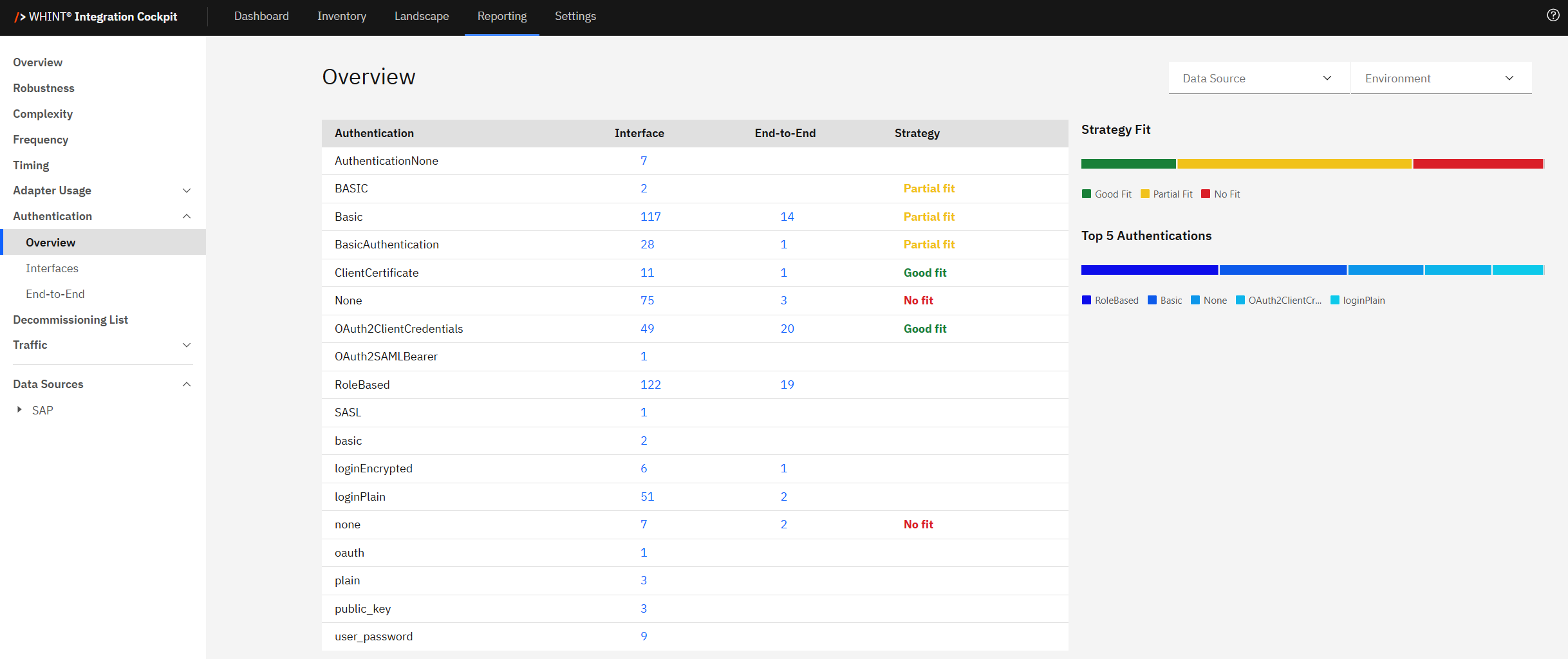
Authentication displays the security method distribution across your integration landscape, highlighting which authentication types are used most frequently and how well they align with your security strategy.
What you see:
-
Authentication distribution table with authentication types, clickable blue interface counts, and strategy fit indicators
-
Strategy Fit legend showing Good Fit (green), Partial Fit (yellow) and No Fit (red) classifications
-
Strategy Fit bar displaying overall security strategy alignment
-
Top 5 Authentications bar chart showing the most frequently used authentication methods
-
Data Source filter to analyze specific integration platforms
-
Environment filter to switch between configured environments (e.g. Production, Test Development) views
Using Authentication Counts
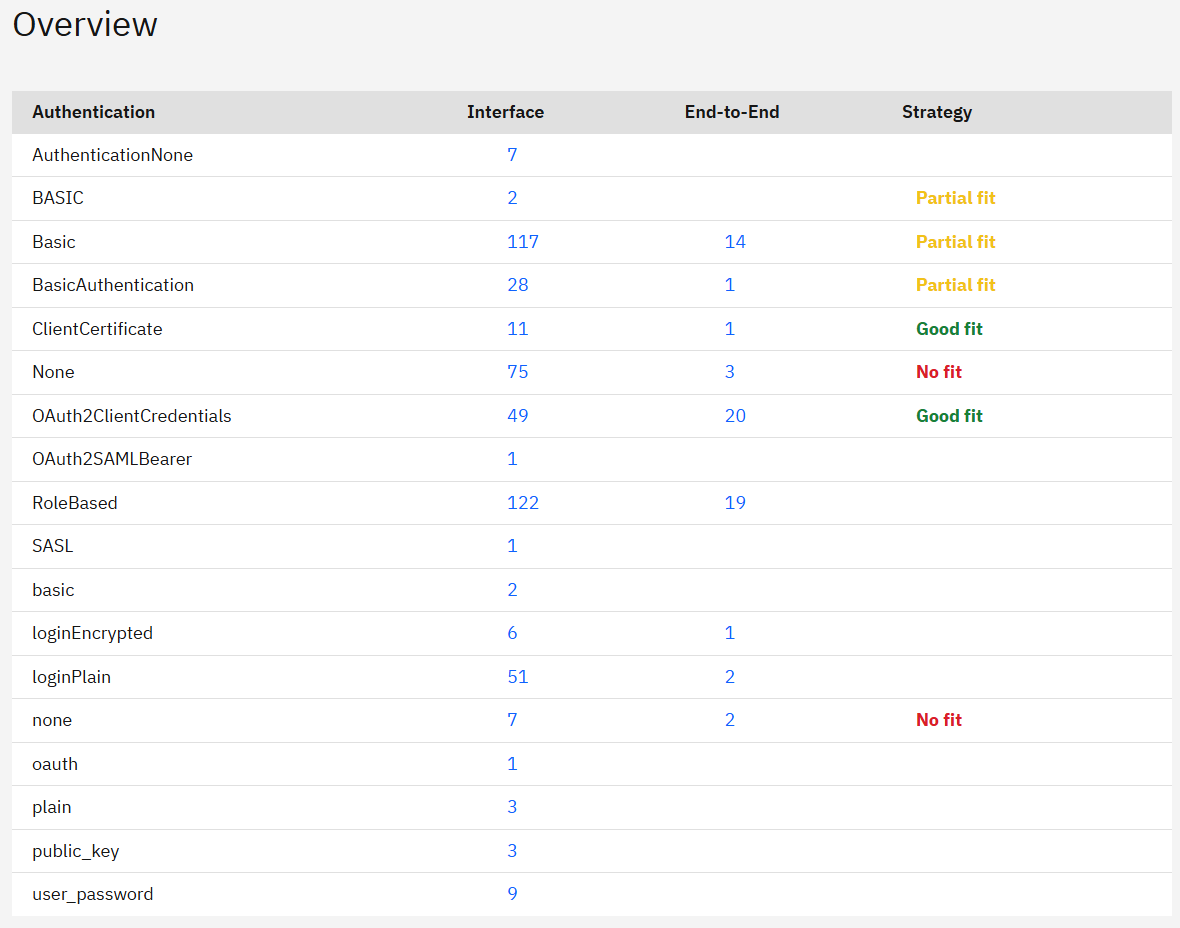
Authentication table shows detailed information for each authentication method in your landscape:
|
Column |
Description |
|---|---|
|
Authentication |
Security method name (e.g. Basic, OAuth2ClientCredentials, None) |
|
Interface |
Clickable blue count of interfaces using this authentication |
|
End-to-End |
Number of end-to-end processes using this authentication |
|
Strategy |
Strategic classification if configured |
|
Strategy Fit |
Color-coded indicator (Good fit/Partial fit/No fit) |
How to use the interface counts:
Click blue interface count numbers to filter and view specific interfaces:
-
Click "117" (Basic) → Shows all interfaces using Basic authentication
-
Click "122" (RoleBased) → Displays role-based authentication interfaces
-
Click "75" (None) → Lists interfaces with no authentication (security risk)
-
Click "49" (OAuth2ClientCredentials) → Shows OAuth2-based secure interfaces
-
Click any authentication count to see detailed interface breakdown
Strategy Fit
Strategy Fit shows how well your authentication methods align with your security strategy:

Strategy Fit legend:
-
Good Fit (Green) → Authentication methods aligned with your security strategy (e.g. OAuth2ClientCredentials, ClientCertificate)
-
Partial Fit (Yellow) → Acceptable but not ideal authentication methods (e.g. Basic, BasicAuthentication)
-
No Fit (Red) → Deprecated or insecure authentication methods (e.g. None, plain text)
How to use Strategy Fit:
-
Good Fit authentications → Continue using and promote for new interfaces
-
Partial Fit authentications → Monitor usage, plan security upgrades when possible
-
No Fit authentications → Priority security remediation candidates
Strategy indicators help:
-
Identify security risks → High usage + No Fit = urgent security action needed
-
Support security standardization → Promote Good Fit authentication across teams
-
Guide security decisions → Avoid No Fit authentication for new implementations
Top 5 Authentications
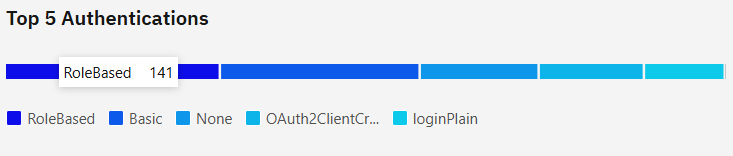
Top 5 Authentications displays the most frequently used authentication methods across your integration landscape:
Current top authentications:
-
RoleBased - Dominant authentication method (141 interfaces)
-
Basic - Traditional username/password authentication
-
None - No authentication (potential security risk)
-
OAuth2ClientCredentials - Modern secure authentication standard
-
loginPlain - Plain text authentication (security concern)
Use Top 5 Authentications to:
-
Identify security concentration and potential authentication dependencies
-
Support security modernization planning by understanding current authentication mix
-
Guide standardization efforts based on actual usage patterns
-
Assess security portfolio balance between secure and legacy authentication methods
Authentication (Selected)
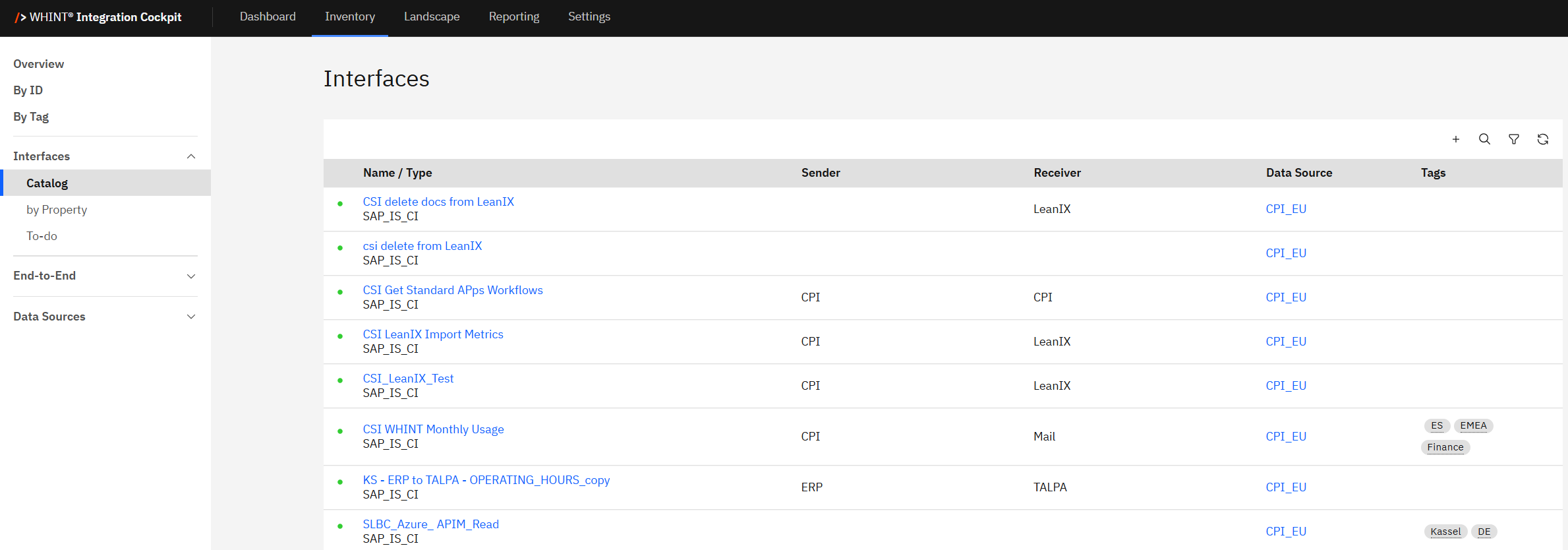
When you click any blue authentication count, you'll see the Interfaces table filtered to show only interfaces using that specific authentication method.
What you see after clicking:
-
Filtered interface list showing only interfaces with the selected authentication (e.g. OAuth2ClientCredentials)
-
Interface details including Name/Type, Sender, Receiver, Data Source and Tags
-
Search and filter controls to further refine the results
-
Green status indicators showing interface health
-
Sortable columns for organizing the interface list
Use the filtered view to:
-
Review security implementation across specific authentication types
-
Identify security inconsistencies by examining interfaces with the same authentication
-
Plan security upgrades by understanding which interfaces use deprecated methods
-
Assess security coverage based on authentication patterns
Click the browser back button or navigate to Reporting → Authentication to return to the authentication overview.
Authentication Insights
Security distribution patterns:
-
High Basic usage may indicate legacy authentication requiring modernization
-
Strong OAuth2 presence suggests modern security architecture adoption
-
None authentication usage represents immediate security risks requiring attention
Recommended actions:
-
High usage + No Fit → Priority security remediation candidates (e.g. high None usage)
-
Low usage + No Fit → Easy wins for security cleanup (e.g. deprecated methods)
-
High usage + Good Fit → Success patterns to promote (e.g. OAuth2ClientCredentials)
-
Fragmented usage → Opportunities for authentication standardization
Security planning:
-
Use authentication data to support security roadmap decisions
-
Identify opportunities for authentication consolidation and standardization
-
Plan migration strategies for No Fit authentication methods with high usage
-
Promote Good Fit authentication methods for new interface development
These classifications control how authentication usage is displayed in the Strategy Fit dashboard panels and help identify alignment with your security architecture.
Related Documentation
For comprehensive authentication strategy and security analysis:
-
Onboarding Guide - 2.3.2 Authentication - Authentication strategy configuration
Last Updated: August 25, 2025